Signs he is ready to commit but is scared: 10 signals to watch for
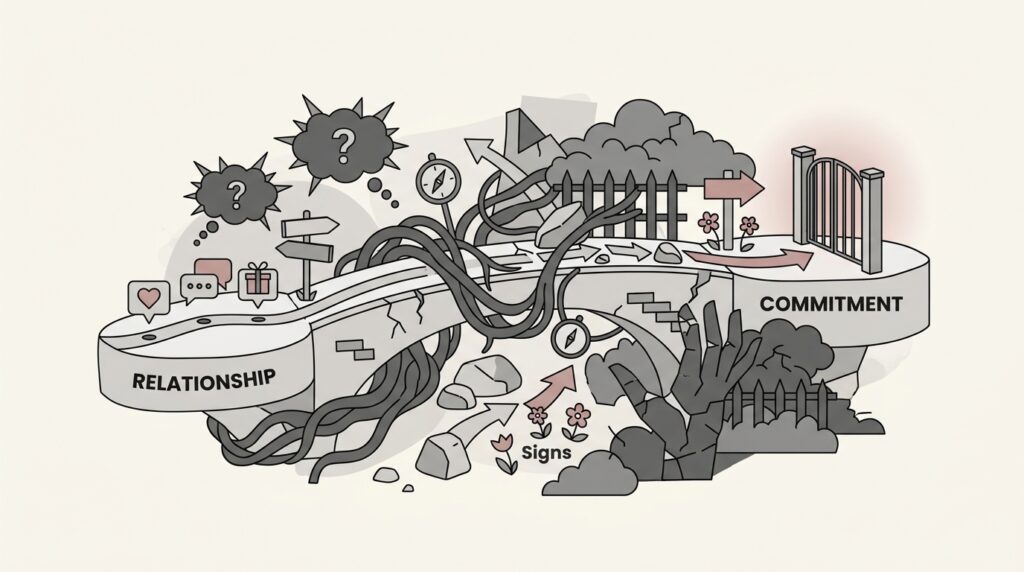
You know that feeling when everything seems perfect one moment, and then he pulls away the next? He texts you constantly for a week, then disappears for days. He opens up about his feelings, then suddenly acts like you’re just friends. If you’re nodding along, you’re not alone. So many women find themselves caught in this confusing cycle, wondering: does he actually care, or is he just not that into me?
Here’s the truth that might surprise you. Sometimes the men who pull away the hardest are the ones feeling the most. They’re caught between genuine feelings for you and deep-seated fears about what commitment means. Understanding the signs he is ready to commit but is scared can save you months of confusion and heartache. It can also help you decide whether this connection is worth nurturing or if you’re pouring energy into someone who simply cannot meet you where you are.
Let’s break down what this actually looks like in real life, why it happens, and most importantly, what you can do about it without losing yourself in the process.
Why men get scared of commitment (even when they care)
Before we dive into the specific signs, it helps to understand what’s actually happening beneath the surface. Men aren’t afraid of commitment because they don’t want love. Often, they’re afraid because they want it too much.
Research from clinical psychologist Diana Kirschner identifies eight core fears that drive commitment hesitation in men. These fears usually have roots in childhood experiences, past relationships, or deep-seated beliefs about themselves. Understanding these can help you see his behavior with more compassion while also protecting your own heart.
The eight fears that hold him back
Fear of rejection tops the list. Some men are terrified that if they fully commit, you’ll eventually lose interest and abandon them. This fear often shows up as conflict avoidance. He’d rather pull away quietly than risk a conversation that might lead to you walking away.
Fear of being controlled comes from the strong mothering pressure many men experienced growing up. They value their independence deeply and worry that commitment means losing their freedom entirely. You might hear this in phrases like “the ball and chain” or see it when he panics at the thought of making future plans.
Fear of not measuring up affects men who worry they can’t give you what you deserve. The more he cares about you, the more he fears he’ll fail you in some irretrievable way. This can lead to self-sabotage just when things are getting serious.
Other fears include not feeling lovable, being found out (having secrets or shame exposed), not trusting women due to past hurts, not feeling ready to “grow up” into family responsibilities, and fear of making the wrong decision that closes off other options.
The hero instinct connection
There’s another piece of this puzzle that relationship coach James Bauer identified called the Hero Instinct You can read more about it here. Men have a biological drive to feel needed, essential, and irreplaceable to their partner. When this instinct isn’t triggered, they may care about you but still feel uncertain about the relationship’s value.
When a man feels like he can make a real difference in your life, that you genuinely need and appreciate his unique contributions, something shifts. He stops seeing commitment as a trap and starts seeing it as an opportunity to be the partner he wants to be. This doesn’t mean pretending to be helpless. It means allowing him to show up for you in ways that matter.
Normal fear versus commitment phobia
Here’s an important distinction. Some fear is normal in any developing relationship. Both men and women experience worries about losing independence, changing their lifestyle, or making the wrong choice. The difference lies in whether he’s willing to work through those fears or let them control him.
A man with normal fears will still move forward over time. He might need more space than you’d prefer, but you’ll see incremental progress. He’ll gradually open up more, include you in more of his life, and become more comfortable discussing the future.
A man with true commitment phobia stays stuck. No matter how much time passes or how patient you are, he finds new reasons to keep distance between you. He might want you desperately when you’re pulling away, then panic the moment you get close again.
The 10 signs he wants to commit but is scared
Now let’s look at the specific behaviors that indicate he has genuine feelings but fear is holding him back. These signs he is ready to commit but is scared show up consistently across relationships where men are emotionally invested but struggling with vulnerability.
1. He’s hot and cold with his affection
One moment he’s deeply engaged, texting you throughout the day, making plans, and seeming genuinely excited about your connection. The next moment he’s distant, taking hours to respond, and acting like nothing special exists between you.
This hot-and-cold pattern often reflects an internal struggle. He wants closeness, but vulnerability feels risky. When he lets himself get close, his fear kicks in and he pulls back to protect himself. The frustrating part? He might not even realize he’s doing it.
The key difference between this and simple disinterest is the intensity when he’s “on.” A man who’s genuinely interested but scared shows real emotional investment during the good times. He’s present, attentive, and connected. Someone who’s not interested maintains a consistent level of lukewarm engagement.
2. He avoids labels but keeps coming back
He won’t call you his girlfriend. He changes the subject when you try to define the relationship. He says things like “I’m not ready for anything serious” or “Let’s just see where this goes.” Yet somehow, he never actually goes anywhere.
This is one of the most telling signs he is ready to commit but is scared. If he truly didn’t want commitment, he wouldn’t stick around. He’d fade away, find excuses to end things, or keep things so casual that you naturally drift apart. Instead, he maintains the connection while keeping an escape route open.
Pay attention to what happens when you create distance. A scared man who cares will often step up his efforts when he senses you pulling away. He might not commit, but he’ll work harder to keep you in his life. Someone who’s not interested won’t notice or care when you step back.
3. He shares vulnerabilities then withdraws
Maybe he opened up about his difficult childhood, a past heartbreak, or deep insecurities he doesn’t show many people. For a moment, you felt incredibly close, like you were seeing the real him. Then suddenly he became distant, “busy,” or emotionally unavailable.
This pattern reveals genuine emotional investment. Vulnerability requires trust, and he trusted you with parts of himself he protects carefully. The withdrawal that follows isn’t about you. It’s about his discomfort with having been so exposed.
Men who don’t care don’t share their vulnerabilities in the first place. They keep conversations surface-level because there’s no emotional stake for them. When a man shows you his fears, his past wounds, or his self-doubts, he’s showing you that you matter to him, even if he panics afterward.
4. He acts different in public versus private
When you’re alone together, he’s affectionate, open, and engaged. He might hold your hand, look into your eyes with genuine warmth, and have deep conversations that last for hours. But around others, he becomes more reserved, distant, or even acts like you’re just friends.
This public-private split often indicates fear of appearing “taken” or committed. In private, he can be himself without the pressure of what it means. In public, every affectionate gesture feels like a statement to the world that you’re together, and that terrifies him.
Watch how he introduces you to people. Does he use your name without context? Does he avoid terms like “girlfriend” or “partner”? Does he physically create space between you when others are around? These subtle behaviors reveal his discomfort with the visible markers of commitment.
5. He shows jealousy without committing
He gets noticeably uncomfortable when you mention other men. He asks questions about your male friends or coworkers with a tone that suggests he’s not just curious. He might make protective comments or show subtle possessiveness about your time and attention.
This jealousy without commitment creates a frustrating contradiction. On one hand, he wants to claim you. He doesn’t want other men having access to what he sees as his territory. On the other hand, he won’t make the commitment that would actually secure his place in your life.
A man who doesn’t care might show mild curiosity about your dating life, but he won’t display genuine jealousy. He has no emotional stake in who else you’re seeing. When jealousy appears alongside commitment avoidance, it usually signals that he feels more than he’s willing to admit.
6. He talks about the future in vague terms
He mentions things you’d do together “someday” or places he’d love to take you “eventually.” He talks about future events as if you’ll be there, but when you try to pin down specific plans, he becomes evasive.
This vague future-talk shows that he imagines you in his life long-term. He can’t help but include you in his vision of what’s coming. But concrete planning feels too much like a promise he isn’t ready to keep.
Listen for phrases like “one day we should…” or “maybe next year we could…” These future-oriented statements reveal his internal picture of you together. The problem isn’t that he doesn’t see a future with you. It’s that he’s afraid to commit to making it real.
7. He prioritizes you in actions even if not in words
He might not say “I love you” or call you his girlfriend, but his actions tell a different story. He shows up when you need him, even if it’s inconvenient. He makes time for you despite a busy schedule. He remembers the little things you mention and follows up on them later.
Actions often reveal the truth that words hide. A scared man might struggle to verbalize his feelings, but he’ll demonstrate them through consistent behavior. He’ll be there for the important moments. He’ll make sacrifices to support you. He’ll invest his time and energy in maintaining your connection.
Compare what he does to what he says. If his words are hesitant but his actions are committed, you’re likely dealing with fear rather than disinterest. Someone who doesn’t care won’t consistently show up, regardless of what words they use.
8. He has a history of short relationships
When you learn about his past, you notice a pattern. Relationships that ended around the three to six-month mark. Ex-partners who describe similar frustrations about his fear of commitment. A string of “almost” relationships that never quite became official.
This pattern suggests that his current behavior isn’t about you specifically. It’s a recurring theme in his romantic life. He gets close enough to care, then finds a reason to pull away before things get too serious.
Understanding his history helps you see the situation more clearly. If he’s shown this pattern repeatedly, he may need professional help or significant personal growth to break it. Your patience and understanding alone might not be enough to change a deeply ingrained pattern.
9. He apologizes for his inconsistency
He acknowledges that he’s being confusing. He might say things like “I’m sorry I’m so messed up” or “You deserve better than how I’m treating you.” He expresses frustration with himself and seems genuinely pained by his inability to fully show up for you.
This self-awareness distinguishes fear from manipulation. A player or someone who’s not interested won’t apologize for their inconsistency because they don’t care how it affects you. They might make excuses, but they won’t express genuine regret.
When he apologizes for his behavior, he’s showing you that he knows he’s falling short of what you deserve. He recognizes the gap between his feelings and his actions. This awareness is actually a positive sign, though it doesn’t solve the underlying problem.
10. He asks if you’ll still want him later
He questions whether you’ll still care about him over time. He expresses insecurities about his worthiness of your love. He might ask things like “Why do you even put up with me?” or “You could do so much better.”
These questions reveal his fear of eventual rejection. He’s worried that if he commits fully, you’ll eventually see his flaws and leave. By keeping distance between you, he protects himself from the pain he anticipates.
His insecurity might seem like fishing for compliments, but it often runs deeper. He genuinely struggles to believe he can hold your interest long-term. This fear of not being enough can drive the very behavior that pushes you away.
Fear versus disinterest: how to tell the difference
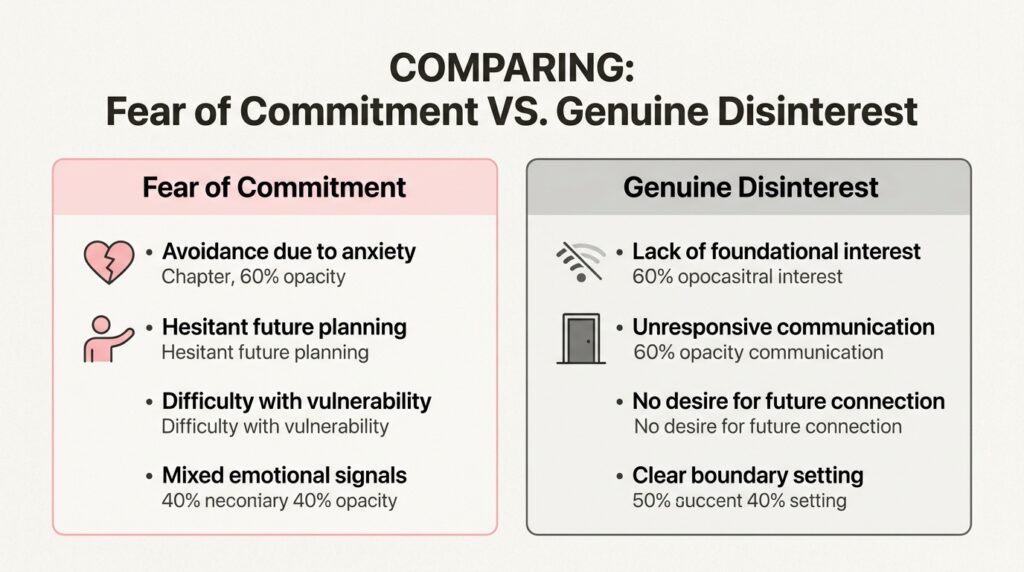
The most common question women have is some version of: how do I know if he’s scared or just not into me? This distinction matters because it determines whether there’s potential for growth or if you’re wasting your time on someone who will never meet you where you are.
Here’s a side-by-side comparison to help you recognize what you’re actually dealing with:
| Sign | Fear of Commitment | Genuine Disinterest |
| Consistency over time | Cycles between intense engagement and distance, but the pattern repeats | Steady decline in effort and attention |
| Response to your distance | Steps up efforts when you pull back, reaches out more frequently | Barely notices or continues fading away |
| Emotional sharing | Opens up vulnerably at times, then withdraws | Keeps conversations surface-level consistently |
| Jealousy | Shows protective or possessive behavior | No reaction to other men in your life |
| Future planning | Vague references to future together, avoids specifics | No future-oriented conversation at all |
| Effort during conflicts | Tries to reconnect after disagreements, even if awkwardly | Lets conflicts end the connection without repair attempts |
| Physical presence | Seeks physical closeness and intimacy | Physical distance matches emotional distance |
The key differentiator is consistency of effort over time. Fear creates an intermittent pattern where genuine care keeps breaking through despite his attempts to protect himself. Disinterest shows a steady trajectory of declining engagement without those moments of real connection.
The step-back test
One way to get clarity is to consciously create some space. Stop initiating contact for a period and observe what happens. A man who’s interested but scared will often feel your absence and reach out. He might not commit, but he’ll work to maintain the connection.
Someone who’s not interested will let the distance grow without much effort to bridge it. He might respond if you contact him, but he won’t actively work to keep you in his life. This test isn’t about playing games. It’s about gathering information to help you make informed decisions.
What you can do (without chasing)
Understanding his fears is helpful, but you also need practical strategies for navigating this situation. The goal isn’t to fix him or convince him to commit. It’s to create conditions where he can feel safe enough to choose you while maintaining your own boundaries and self-respect.
Give space without withdrawing completely
When he pulls away, resist the urge to chase harder or to completely shut down. Instead, match his energy while staying open. If he needs a few days to himself, give him that space without making him feel punished for it. But also use that time to focus on your own life, friends, and interests.
This balanced approach shows him that you respect his needs without abandoning your own. It also gives him the opportunity to feel what life is like without you in it, which can help clarify his true feelings.
Communicate your feelings without pressure
Honest communication doesn’t have to mean issuing ultimatums or demanding commitment. You can express how his behavior affects you without making him feel cornered. Try statements like “I really enjoy our time together, and I get confused when things shift suddenly” rather than “Why won’t you commit to me?”
Focus on your own experience rather than criticizing his behavior. This invites understanding rather than defensiveness. It also gives him information he needs to understand the impact of his actions.
Trigger his hero instinct
Remember the Hero Instinct we discussed earlier? You can activate this by allowing him to contribute meaningfully to your life. Ask for his help with things he does well. Show appreciation for his unique contributions. Let him see that his presence makes a tangible difference in your happiness.
This isn’t about pretending to be helpless or creating fake problems. It’s about recognizing and appreciating the ways he naturally adds value to your life. When a man feels genuinely needed and appreciated, his resistance to commitment often softens.
Set boundaries while showing patience
Being patient doesn’t mean being a doormat. You can have compassion for his fears while also having standards for how you deserve to be treated. Decide what you need to feel secure and communicate those needs clearly.
Maybe you need consistent communication, or you need to know where you stand after a certain amount of time. Whatever your boundaries are, honor them. If he consistently violates your basic needs for respect and consistency, his fears don’t excuse the behavior.
Know when to walk away
Sometimes the healthiest choice is to recognize that his fears are too deep for this relationship to work, at least right now. If he’s not making any progress over time, if he blames you for his inability to commit, or if you feel like you’re constantly waiting for him to be ready, it might be time to move on.
Your love and patience cannot heal wounds that require professional help or significant personal growth. You deserve a partner who can meet you with full presence and commitment, not someone who keeps you perpetually waiting on the sidelines.

When to be patient versus when to walk away
So how do you know if this is a situation worth waiting through or one you should leave? Here are some guidelines to help you decide.
Green lights: signs progress is possible
- He’s self-aware: He recognizes his patterns and acknowledges how they affect you
- He’s making small progress: Over time, you see incremental improvements in his ability to be present and open
- He’s emotionally available in moments: Even if he pulls back sometimes, he has the capacity for real connection
- He’s willing to communicate: He’ll talk about his fears, even if he struggles to act differently
- He seeks help: He’s open to therapy, coaching, or personal growth work
Red flags: signs this won’t change
- No progress over time: Months pass without any meaningful change in his behavior
- He blames you: He suggests his fear is your fault or that you’re asking for too much
- You’re an option, not a priority: He keeps you on the back burner while exploring other connections
- His words and actions never align: He makes promises he consistently breaks
- The situation damages your self-worth: You find yourself feeling anxious, insecure, or not good enough
Timeline guidance
There’s no universal timeline for how long to wait, but most relationship experts suggest that if there’s no meaningful progress after three to six months of dating, the pattern is unlikely to change without significant intervention.
Pay attention to your own emotional state. If you’re constantly anxious, walking on eggshells, or feeling like you’re not enough, those are signs that the situation isn’t healthy for you regardless of his reasons.
You deserve to be chosen
Here’s what I want you to remember most. The signs he is ready to commit but is scared can help you understand his behavior, but they don’t obligate you to stay in a situation that isn’t meeting your needs. Understanding why someone struggles doesn’t mean you have to accept treatment that hurts you.
A man who truly wants to be with you will find a way to work through his fears. He might need time, patience, and support, but he’ll show you through consistent effort that he’s trying. He won’t keep you in perpetual uncertainty while he figures himself out.
The right man won’t need to be chased, convinced, or waited for indefinitely. He’ll recognize your value and step up to meet you there. He’ll choose you not because you made him feel guilty or issued ultimatums, but because he can’t imagine his life without you in it.
If you’re currently navigating this confusing territory, be gentle with yourself. It’s hard to love someone who keeps one foot out the door. Trust your instincts, honor your needs, and remember that you deserve a love that meets you with full presence and commitment.
Frequently asked questions
Q1: How long should I wait for a man who shows signs he is ready to commit but is scared?
Most relationship experts suggest giving it three to six months to see meaningful progress. If he’s self-aware, making small improvements, and communicating openly about his fears, patience might be warranted. However, if there’s no change over time or if the situation is damaging your self-worth, it may be time to walk away regardless of his potential feelings.
Q2: Can I help him overcome his fear of commitment?
You can create conditions that help him feel safe by giving appropriate space, communicating honestly without pressure, and allowing him to feel needed through the Hero Instinct. However, you cannot fix his fears for him. True change requires his own willingness to grow, possibly through therapy or coaching. Your support can help, but it cannot replace his own work.
Q3: What’s the difference between signs he is ready to commit but is scared and signs he’s just not interested?
The key difference lies in consistency and investment. A scared man maintains contact, shows jealousy, shares vulnerabilities sporadically, and steps up when you create distance. A disinterested man shows minimal effort that steadily declines, doesn’t react to other men in your life, and doesn’t return when you step back. Fear creates intermittent engagement; disinterest creates consistent withdrawal.
Q4: Does the Hero Instinct really work to help a scared man commit?
The Hero Instinct, identified by relationship coach James Bauer, reflects a real psychological need many men have to feel essential and irreplaceable. When triggered genuinely (not through manipulation), it can help a man shift from seeing commitment as a trap to seeing it as an opportunity. However, it works best with men who already have genuine feelings and just need help feeling safe enough to act on them.
Q5: Should I give him an ultimatum if I see signs he is ready to commit but is scared?
Ultimatums rarely create the genuine commitment you want. They might produce short-term compliance born from panic rather than authentic choice. Instead, try clear communication about your needs and timeline. Let him know what you need to feel secure and give him a reasonable timeframe to meet those needs. If he can’t or won’t, you have your answer without the resentment that ultimatums often create.
Q6: Can a man love me but still be too scared to commit?
Yes, absolutely. Love and fear can coexist. A man can have genuine, deep feelings for you while also being terrified of what commitment means. This is why the signs he is ready to commit but is scared can be so confusing. His love might be real, but if his fear is stronger than his willingness to work through it, the relationship still won’t work without significant growth on his part.
Keep Reading